
The companies' underrecoveries stood at a whopping Rs 1,39,869 crore last financial year. Of that, Rs 62,837 crore was accounted for by diesel alone.
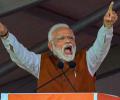
'He keeps reminding me he is senior. There is no debate in this. I have never shown any disrespect to you since you are a senior,' the PM said.

'Fiscal purists would quarrel with the idea of selling assets to pay for current expenditure -- such as the payout to farmers and the health insurance programme -- for the obvious reason that the process cannot go on forever.' 'At some point, the list of assets available for sale will run out,' notes T N Ninan.consultations -- something already aired in connection with the lease of airports to the Adani group, says T N Ninan.

Quite a few large- and mid-cap stocks are yet to recover from the note ban, pharma, banking and rural demand-based industries among laggards.

With inflation down, the government's twin deficits are largely under control.

The Vedanta group on Wednesday confirmed putting in a preliminary expression of interest (EoI) for buying the government's stake in Bharat Petroleum Corp Ltd (BPCL).

Over the years, pravasis have become a constituency, to be tapped, cultivated, and honoured, or at the very minimum to be listened to, says Ambassador B S Prakash.

The Union government will gain close to Rs 1.6 lakh crore in additional revenues this fiscal from a record hike in excise duty on petrol and diesel that has pushed the total incidence of taxation on auto fuels to 70 per cent of the price. Late on Tuesday evening, the government hiked excise duty on petrol by Rs 10 per litre and that on diesel by Rs 13 a litre to mop up gains arising from international oil prices falling to a two-decade low.

Ajit Mishra, vice president, research, Religare Broking, answers your stockmarket queries.

Sun Pharma was by far the biggest gainer in the Sensex pack, surging 8.13 per cent, followed by Dr Reddy's at 4.92 per cent.

The 30-share Sensex ended down 538 points at 26,781 and 50-share Nifty ended down 152 points at 8,067.

The 2019 list shows a 37 per cent jump in brand value for the Tata group, to $19.55 billion for 2019, the highest in the top 25.

About 48.5 million shares, or 20 per cent of the shares on offer, are reserved for retail investors

These firms offer job security and lucrative salries.

In a resolution passed at its national assembly in Haridwar, the SJM said the Modi government's proposed strategic divestment of PSEs was an "imprudent business decision" and "against national interest".
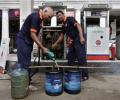
The latest round of petrol and diesel price increase, on Thursday, met with opposition from many corners.

It may be the season for corporate matchmaking but India Inc's record of managing partnerships is far from impressive, says Shailesh Dobhal.

Ajit Mishra, vice president, Research, Religare Broking, answers your queries.

'We began foolishly bragging about Saudi-Emirati investment plans as indicative of the sheikhs 'distancing' from Pakistan, including on Kashmir,' notes Ambassador M K Bhadrakumar.

Investors continue to make losses on investments.

ONGC is raising debt for a spate of acquisitions over the past year
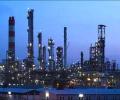
These refineries, commissioned mostly in the 1950s and 1960s during India's early industrialisation push, are inefficient and costly to maintain compared to their modern counterparts on the coast mainly operated by private companies.

Reliance Industries has regained the top slot among Indian energy companies on the Platts global list

Rediff readers tell us what they did with their first salaries.

Markets ended in green on rate cut hope.

Markets crashed due to domestic worries; bluechip stocks tanked too.

He also said that efforts were on to increase the use of natural gas by four times in this decade and to double the oil refining capacity in the next five years.

Rediff readers tell us what their first salary was and what it meant to them at the time.

Low fuel prices to help oil marketing and refining sectors but upstream players will stay under pressure.

Oil imports are a third of India's total import bill.

Almost 2,000 companies whose private provident and pension funds have invested in non-convertible debentures of IL&FS group firms are staring at the prospect of booking losses to the tune of Rs 9,000 crore or more if the interest income is added.

Diesel makes up nearly half of fuel demand in Asia's No 3 economy.

'We aren't so unreasonable as to demand that he should have fully reversed Indira Gandhi's worst economic legacy, bank nationalisation.' 'But he could have made a beginning by selling off the two most stressed small public sector banks, and then announced that each year for the next 10, one government bank with the most messed-up balance sheet will be sold.' 'It would have electrified the markets, shocked his other banks into better behaviour, and marked his name among the great reformers,' argues Shekhar Gupta.
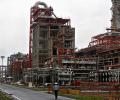
The Rs 3-trillion West Coast or Nanar refinery has all the potential to become India's flagship petrochemicals project, with the planet's largest oil producer Saudi Aramco as its biggest shareholder. Yet the locals don't see the plant as a harbinger of better times.

Interest rate sensitive stocks gain ground post decision
Brokers said a flurry of buying by investors in blue-chips mainly influenced the sentiment.

Sources privy to the development said Maran was being asked to take care of a part of the liabilities.

Analysts are enthused by BPCL's upstream foray and have re-rated the stock in the past couple of years.

Infosys was the top Sensex loser along with other index heavyweights ITC and HDFC.

Finance Minister Nirmala Sitharaman will present her second Budget a little more than a month from now. Like any other FM, Sitharaman will depend on her team of bureaucrats and advisors to frame and present the Budget.
